Cross-Border E‑Commerce in France
France is a mature and highly marketplace‑driven e‑commerce market, where platforms like Amazon, Cdiscount and Fnac‑Darty play a central role in the purchasing journey. High digital penetration and clear expectations around fast delivery, secure payment methods and smooth returns strongly shape consumer behaviour. Particularly in urban regions, online purchasing intent is exceptionally high, creating a stable and well‑structured market with clear competitive dynamics for international retailers.


The French market at a glance


Purchasing power
With a disposable income of around 27,200 euros per capita, France is one of Europe's strongest consumer markets in 2025. The level is distributed very unevenly across regions: the Île-de-France region around Paris is among the country's strongest in purchasing power.
For international retailers this concentration of economically strong regions opens up high sales potential particularly in urban segments such as fashion, home & living, beauty and premium products. Overall France remains an attractive and reliable market for e-commerce companies thanks to stable economic data, high propensity to consume and a digitally savvy population.

Internet usage and consumer behaviour in France
France is a digitally mature and growing e-commerce market that offers retailers attractive opportunities thanks to its size and high transaction volume. Around 95 % of the population is online, which corresponds to more than 65 million potential customers.
Online retail keeps growing: in 2025 e-commerce revenue reached 196.4 billion euros, an increase of 7 % compared with the previous year.





Preferred payment methods
Card payments dominate French online retail, followed by e-wallets and bank transfers:
Payment Method Breakdown
- Cards: around 55 % of online payments, led by the domestic Carte Bancaire (CB) card network, usually combined with Visa or Mastercard
- E-wallets: about 27 %, led by PayPal
- Bank transfers: around 11 %
- Mobile wallets (Apple Pay, Google Pay) and buy now, pay later (Alma, Klarna, Oney and Floa): growing fast
For retailers this means accepting Carte Bancaire (CB) is essential and offering PayPal and an instalment option (buy now, pay later) noticeably improves conversion.
.webp)
Most popular marketplaces and shops
France is a highly marketplace‑driven e‑commerce market. A significant share of online revenue comes from platforms that many consumers use as their primary starting point for online shopping. Key marketplaces include:
- Amazon – the undisputed market leader, dominant across nearly all product categories
- Cdiscount – the largest French generalist marketplace, particularly strong in electronics, household goods and furniture
- Fnac‑Darty – leading in consumer electronics and household appliances
- Veepee (formerly Vente‑Privee) – established in fashion, accessories and home textiles, especially for flash sales
- ManoMano – leading platform for DIY, home improvement, gardening and home projects
- Shein & Temu – very fast‑growing, especially in the fashion segment and among younger audiences
- Zalando – European specialist for fashion and footwear with strong market presence in France

Most popular last-mile carriers
France has a dense and well-developed logistics network. The French carrier market is broadly positioned:

- Colis Privé – a B2C carrier focused on e-commerce, offering home delivery within 24 to 48 hours plus around 7,750 pickup locations across Point Relais, lockers and neighbor pickup points.
- Mondial Relay – an out-of-home specialist with around 17,000 delivery points including 10,000 lockers and 7,000 Point Relais and rapidly growing B2C volumes.
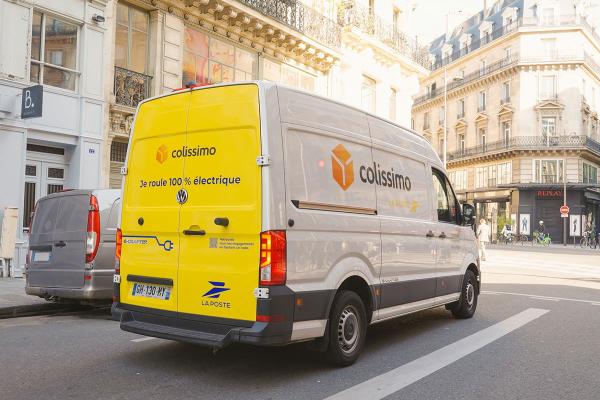
- Colissimo (La Poste) – B2C parcel shipping with wide reach and nationwide coverage.
- Chronopost – the express specialist within the La Poste group, number 1 in France for express delivery up to 30 kg with more than 20,000 Pickup points.
Delivery and fulfilment preferences
In France home delivery remains the most used method at around 54 % of deliveries. The other 46 % go to out-of-home delivery: Point Relais lead clearly ahead of parcel shops, lockers and click & collect. Among customers under 35 in particular, the use of automated lockers is rising sharply.
When making a purchase decision French online shoppers place great value on transparency and clear shipping costs: shipping costs that are too high or unclear are among the most frequent reasons for cart abandonment.


All services from a single source
From customer-friendly delivery options to seamless returns management to real-time tracking and data-based analyses — exporto combines all services for your international growth in one end-to-end solution.

Fast delivery
Offer your customers in Europe an outstanding customer experience—with the shortest processing times, individual shipping options for each destination country and deliveries by the most popular last-mile carriers.

Seamless integration
Thanks to simple API integration, our services fit seamlessly into your existing set-up—flexibly, individually and with minimal technical effort.
Full transparency
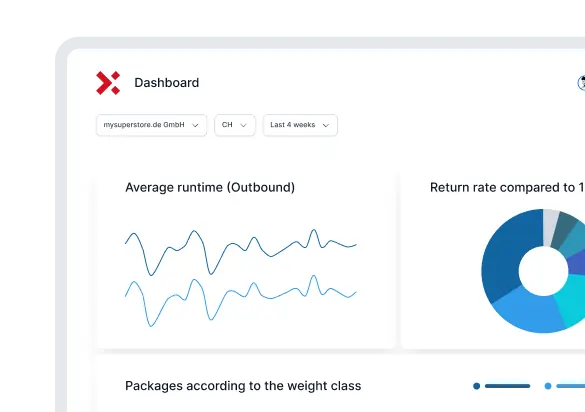
With the help of an intuitive dashboard, you can keep an eye on the status of your international shipments in real time—with automated data synchronization for maximum transparency.


Cross-Border
E-Commerce in
Europe
Cross-Border E‑Commerce to Europe
With exporto, you reach customers in Europe’s key markets as easily as in Germany. Our shipping solution is operationally optimized for these core markets and is constantly being expanded – with a clear focus on stable processes, outstanding service quality and a compelling customer experience.
Explore marketCross-Border
E-Commerce in
Austria
Cross-Border E‑Commerce to Austria
Austria is considered a cross‑border insider tip: Foreign orders account for almost half of e‑commerce sales – one of the highest figures in Europe. With around 8.9 million inhabitants, high purchasing power, and virtually complete Internet coverage, this market offers ideal conditions, especially for German retailers.
Explore marketCross-Border
E-Commerce in
Belgium
Cross-Border E‑Commerce to Belgium
Belgium is one of the fastest-growing e‑commerce markets in Europe: in 2024, sales amounted to EUR 17.4 billion, up 6.7% on the previous year. 31% of orders are placed in foreign stores – a top 5 figure. Linguistic diversity and a central location make the market particularly attractive.
Explore marketCross-Border
E-Commerce in
Switzerland
Cross-Border E-Commerce to Switzerland
Switzerland is one of the markets with the highest purchasing power in Europe – around three times the EU average. In 2023, online sales amounted to EUR 14.7 billion. The low VAT makes the market even more attractive – especially for EU retailers.
Explore marketCross-Border
E-Commerce in
Germany
Cross-Border E‑Commerce to Germany
Germany is one of Europe's largest e-commerce markets and a particularly attractive destination for international retailers: online shopping is frequent and routine, but German customers expect payment by invoice, reliable delivery and hassle-free returns. Those who deliver on this reach a large, active audience that bought €83.1 billion worth of goods online in 2025.
Explore marketCross-Border
E-Commerce in
Denmark
Cross-Border E‑Commerce to Denmark
Denmark is one of the most digitally advanced e‑commerce markets in Europe. The Danish population is tech-savvy and online growth is constantly at a high level. Danes attach particular importance to a convenient, mobile and sustainable shopping experience.
Explore marketCross-Border
E-Commerce in
Finland
Cross-Border E‑Commerce to Finland
Finland is the smallest Nordic e‑commerce market, but has a high cross‑border affinity. The country tops the EU digitalisation index, with around 80% buying online every month. Germany is one of the top delivery countries – 42% of online shoppers order there regularly.
Explore marketCross-Border
E-Commerce in
France
Cross-Border E‑Commerce to France
France is one of Europe’s largest e‑commerce markets – digitally savvy, high in purchasing power and highly attractive for international retailers, with more than 64 million online shoppers. Online revenue rose to over €175 billion in 2024, driven by strong demand in fashion, cosmetics and home & living. For German retailers, France offers a strong, established environment for scalable cross‑border growth.
Explore marketCross-Border
E-Commerce in
Italy
Cross-Border E‑Commerce to Italy
For German retailers Italy is attractive on two counts: a large, high-purchasing-power market with growing online demand and, in the return-heavy fashion segment in particular, one of the lowest return rates in Europe, well below the German level. As the EU's third-largest consumer market it offers reach with noticeably less returns effort.
Explore marketCross-Border
E-Commerce in
Norway
Cross-Border E‑Commerce to Norway
Norway is one of the strongest economic markets in Europe. E‑commerce is growing constantly – international online shops are particularly popular. Norwegian customers attach great importance to reliable shipping, customs and returns processes. The simplified customs procedure VOEC offers attractive conditions – if the requirements are met.
Explore marketCross-Border
E-Commerce in
Netherlands
Cross-Border E-Commerce to Netherlands
With around 18 million digitally savvy inhabitants and an e‑commerce volume of EUR 34.7 billion (2023), the Netherlands is one of the most dynamic online markets in E urope. As a logistics hub with strong purchasing power, the market offers ideal conditions for cross‑border sales.
Explore marketCross-Border
E-Commerce in
Poland
Cross-Border E‑Commerce to Poland
Poland is one of Central and Eastern Europe's leading e-commerce markets. Local preferences shape the entire customer journey: Allegro is the defining shopping platform, BLIK the leading payment method and parcel lockers the most commonly chosen delivery option.
Explore marketCross-Border
E-Commerce in
Sweden
Cross-Border E‑Commerce to Sweden
Sweden is Scandinavia’s largest e‑commerce market: digitally savvy, fast-growing and open to international retailers. Around 89% of consumers buy online every month – flexible delivery options such as pick-up stations are particularly popular.
Explore marketCross-Border
E-Commerce in
UK
Cross-Border E‑Commerce to UK
With online sales of around EUR 152 billion, the UK is the largest e‑commerce market in Europe. Demand remains high despite Brexit. This new level of complexity offers obvious opportunities for retailers with optimised processes.
Explore marketWe are looking forward to hearing from you!
With our end‑to‑end solution, you get all services from a single source: Logistics, tax, customs and software. Everything is perfectly coordinated and as simple as “plug & play”.

Do you have any questions?
We have the answers.
Want to learn more about our solution? Here you’ll find answers to the most frequently asked questions about international shipping with exporto.
For further information, more details or a tailored consultation, feel free to get in touch.
What do German online retailers need to consider when shipping to France?
What matters most when shipping to France is short lead times, delivery via preferred local carriers and a simple returns process so the order feels local for French customers. France is the second largest e-commerce market in Europe and French customers particularly often expect delivery to parcel shops and pick-up points (point relais) alongside home delivery. exporto handles shipping, delivery, tracking and returns in-house as an integrated end-to-end solution so retailers can serve and scale the French market efficiently.
Why is the French market worthwhile for online retailers?
France is the second largest e-commerce market in Europe with around 42 million online shoppers and therefore one of the most important target markets for international expansion. The high demand and the dense competitive delivery landscape make the market particularly attractive for retailers with efficient processes. exporto lets you launch the French market via a single connection and maps shipping, delivery, tracking and returns from a single source.
Which delivery options do French customers expect?
French customers expect flexible delivery options, in particular delivery to parcel shops and pick-up points (point relais) which are especially widely used in France, alongside classic home delivery. Preferred local carriers include Colissimo, Mondial Relay and Chronopost. exporto uses local delivery logic and these preferred last-mile carriers in the target market and connects delivery, tracking and status communication so the order feels local for customers in France.
How do retailers handle returns from France efficiently?
Returns from France become efficient when customers can drop off the return locally and easily, preferably via the pick-up points widely used in France, and the return is processed in a standardised way for retailers. It is important to observe the statutory 14-day right of withdrawal (rétractation) which requires clear and transparent returns conditions. exporto provides a shop-branded returns portal, consolidates returns locally and brings them back to your domestic warehouse quickly.
How do companies make shipping to France efficient?
Shipping to France becomes efficient when all process steps run in an integrated way and can be steered via a single connection: shipping, delivery via preferred local carriers, tracking and returns work together. What matters is consistent data, late cut-offs and automated processes for short and reliable lead times. exporto maps this process chain as an integrated end-to-end solution from a single source and makes performance in the French market centrally manageable.